How a Dagenham Barber Got 450 Loyalty Members in 3 Weeks
Every February, the same thing happened at a barbershop in Dagenham. The owner dropped his price from £20 to £10 for three weeks — half off. The queue went round the block. Other local barbers cursed him for it. Customers raved about it.
And every March he asked himself the same question: who actually came back?
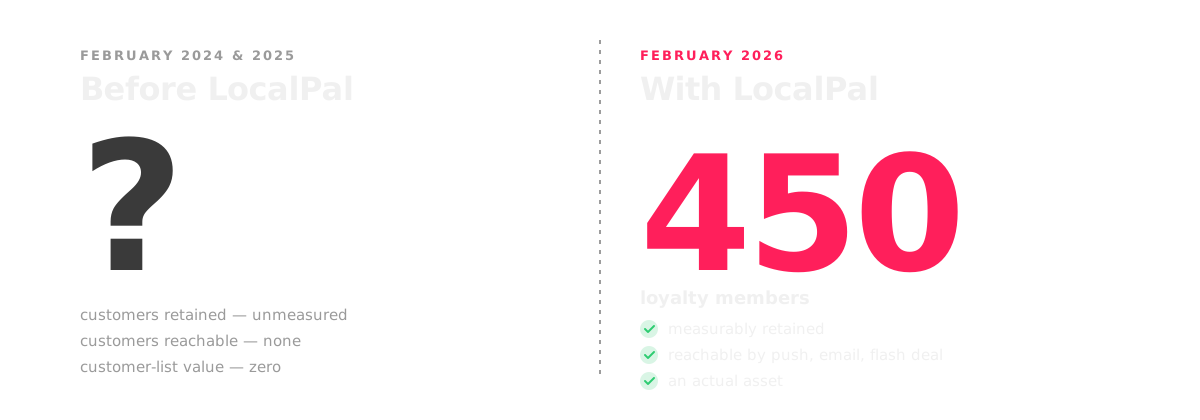
He didn't know. He couldn't know. The till didn't tell him. The receipts didn't tell him. Some customers obviously stuck around — he recognised faces. But the proportion? The exact numbers? Black box.
"I make this crazy deal that destroys the market for the entire February. But I don't really know how many customers I retain. Are they one-time? Do they become regulars? I don't know. And after the discount, customers don't really have another reason to come back — the price goes back to the same as every other shop nearby."
In 2026 he heard about LocalPal. He called us on a Monday; the programme was live in his shop the same day, with the NFC reader at his door before the sale started.
This is what happened over the next three weeks, and the small change in how he ran the discount that turned it into the fastest customer-list build we've seen on the platform.
(If you want to see what loyalty looks like for your own shop, here's our merchants page.)
The problem with a great sale
A half-price February is a good piece of high-street marketing. It works as theatre — the queue itself becomes the advertisement. New customers walk past, see the crowd, and try the place. Existing customers feel like they're getting a treat. The owner takes a margin hit for three weeks in exchange for a flood of foot traffic.
But a sale on its own has a structural problem. The discount is the only reason the customer is there. Once it ends, the customer has nothing tying them to your shop that isn't equally true of the shop next door — same price, same haircut, same convenience.
Our barber had been running the February sale for years. He knew, in the abstract, that he kept some customers. He just couldn't see who, how many, or why.
The pivot — one condition added to the deal
When we switched on LocalPal for him on the Monday before the sale, the conditions of his deal changed slightly.
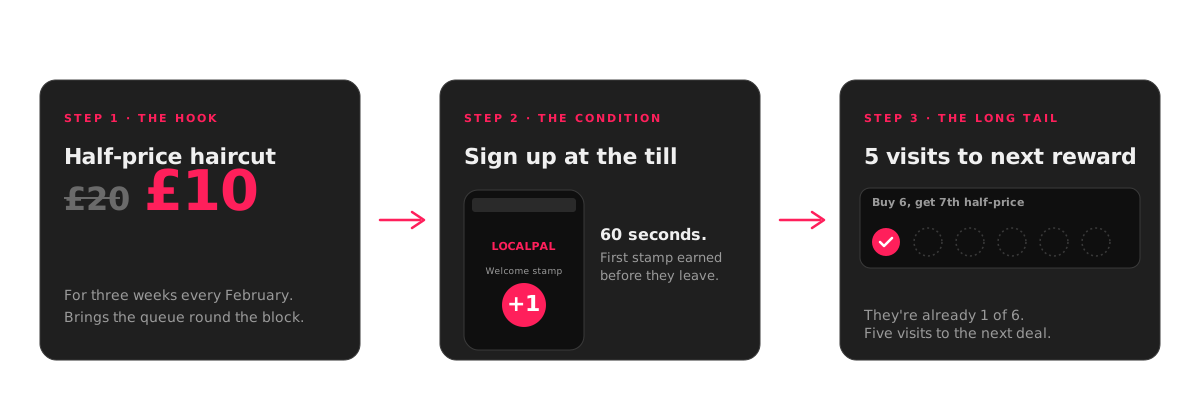
To get the £10 haircut, the customer had to sign up to the shop's loyalty programme and get their first stamp.
That was it. One sentence added to the offer. The discount itself was unchanged.
His loyalty programme was a standard stamp card: collect 6 stamps, get your 7th cut at 50% off. The same mechanic any high-street shop has seen on a paper card for decades — the difference being that this one lived on the customer's phone, not in their wallet.
The geometry of the offer changed in an important way. A customer walking in for the £10 cut wasn't just getting a one-time deal. They were getting the £10 cut and leaving the shop already 1 of 6 stamps closer to another half-price cut — at the regular £20 price.
They weren't being asked to start a loyalty card from zero. They already had one.
What happened next
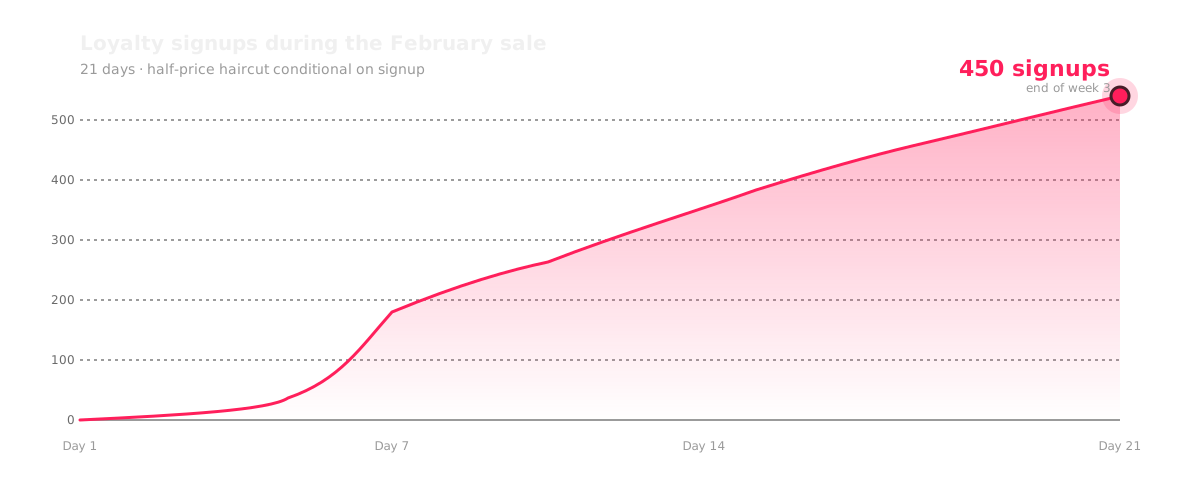
Three weeks. 450 signups.
That's a customer joining the list roughly every seven minutes of trading time across the sale period. To our knowledge no barbershop on LocalPal has built a loyalty list at that velocity before — though we'll caveat that we haven't independently verified the claim against every barbershop's first-month data; we flagged it because the number was high enough to surprise us.
By the end of March the list sat at over 500 customers. The sale was over. Prices were back to £20. The customers were still there.
Why it worked — three mechanics
The result wasn't an accident. Three things compounded.
1. The hook does the heavy lifting. Getting 450 customers to sign up to a loyalty programme cold — without a sale, without a reason — would have taken our barber months, possibly years. The 50% discount is what got phones out and apps downloaded. It's the most expensive part of customer acquisition, and he was already paying it. He just hadn't been converting it before.
2. The reward sits one purchase closer than it feels. A new customer being asked to start a fresh "buy 6, get the 7th half off" card sees six visits stretching ahead of them. A new customer who's already 1 of 6 — because of the welcome stamp from the £10 cut — sees five. That difference is psychological, not mathematical. It's also the difference between a card that gets abandoned and a card that gets completed. (We wrote about why first-stamp welcome offers are the single most important tweak in any new programme in How to Start a Loyalty Programme for Your Shop.)
3. The discount stopped being temporary. The 50% off didn't end on the last day of February. It just changed shape — instead of a once-a-year flash, it became "get to stamp 6 and your next cut is half off." For the customer, the sale never quite finishes. They're always working toward the next discounted cut.
What the owner does now — between the Februarys
The biggest shift wasn't in February. It was in everything after.
Before LocalPal, the owner's relationship with his customers was strictly in-shop. They walked in or they didn't. He had no way of telling someone he'd missed a particular regular for a few weeks. He had no way of filling a quiet Tuesday afternoon.
He has both now. The list of 500+ customers is also a list of 500+ people he can:
- Send a push notification to when a slot opens up unexpectedly.
- Email a monthly note when there's something new at the shop.
- Run a flash deal at when Wednesday is looking slow at 3pm — "first three bookings get £5 off," claimed in the app.
This is the part most shops miss when they think about loyalty programmes. The stamps are the visible mechanic. The customer list is the actual asset. Worth reading: Flash Deals: Fill Quiet Hours Without Cutting Margins.
How to copy this — even if you don't run a half-price sale
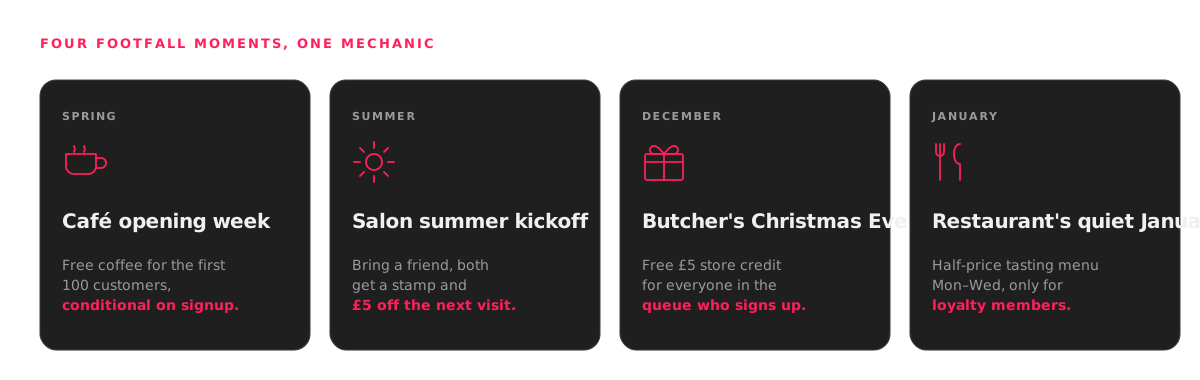
The mechanic transfers cleanly. You don't need a 50% discount; you need any moment when foot traffic spikes for a reason that isn't your loyalty programme.
Some examples we've seen work, or that we'd expect to work:
A café in opening week — free coffee for the first 100 customers, conditional on signup. A barber's grand re-opening after a refit — half price the first week, sign up to claim. A butcher's Christmas Eve queue — free £5 store credit for everyone in line, conditional on signup. A restaurant's quiet January — half-price tasting menu Monday to Wednesday, only for loyalty members. A nail salon's summer kickoff — bring a friend, both get a stamp and £5 off.
The shape is always the same: the customer was going to come anyway. While they're here, they leave with a loyalty card.
For a deeper read on adapting this to other shop types, see Loyalty Programmes for Barbers & Salons: What Works and the broader How to Start a Loyalty Programme for Your Shop guide.
How LocalPal handles all of this
LocalPal is built so a shop owner running a February sale, a re-opening, or any other footfall moment can convert that moment into a customer list — the same day they pick up the phone.
-
Same-day onboarding. Call us; we configure the programme remotely while you're on the phone; the NFC reader ships next day.
-
Stamps or store credit, your choice. Barbers usually want stamps. Butchers usually want store credit.
-
Welcome offer = first stamp free. Built into the platform, two clicks to enable.
-
Push, email and flash deals included. The 500-strong list does the work even after the sale is long over.
-
£25/month flat. No contract. No setup fee. No POS integration. No per-customer charge — sign up 450 in three weeks and your bill doesn't move.
Set your shop up on LocalPal — it takes about an hour. Or message us on WhatsApp at +44 7564 210401 if you'd like to talk it through first.
The lesson sits in one sentence. A sale alone is a moment. A sale plus a loyalty signup is a customer list. If you've got a moment coming up — seasonal, opening, re-opening, or just a quiet patch you want to fix — start here.